
Luxury Real Estate in 2026: Market Trends, Top Cities and Expert Tips for Buyers and Investors

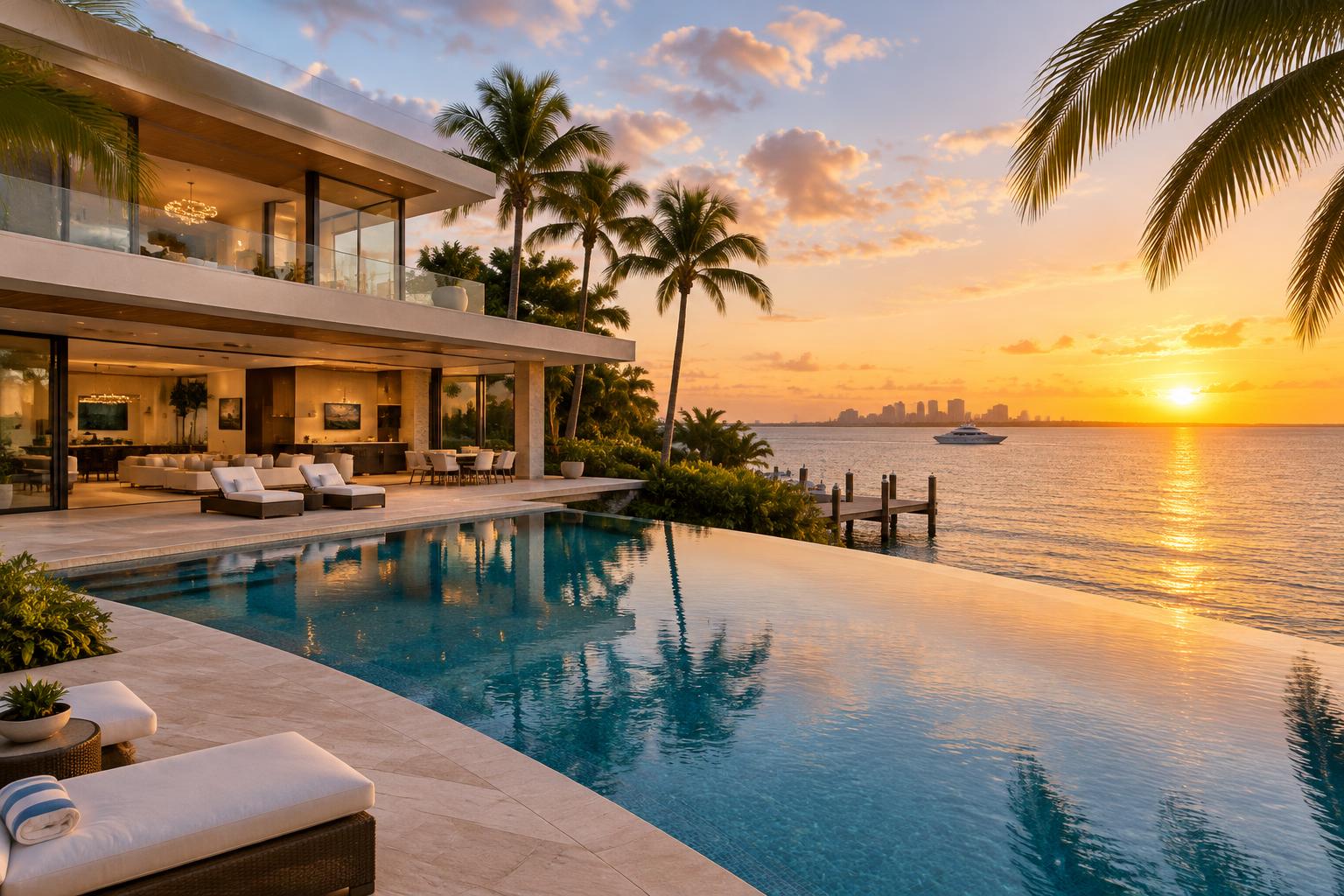
A waterfront penthouse in Dubai. A private estate in the Hamptons. A villa on the cliffs of the Côte d’Azur. Luxury real estate has always been about more than square footage. It is about lifestyle, privacy, legacy and, increasingly, smart wealth preservation.
But the luxury market of 2026 looks very different from even a few years ago. Wealth is more mobile, buyers are more global, and the definition of “luxury” now includes wellness, sustainability and smart-home technology alongside marble and sea views.
Whether you are buying your dream home, a second residence or an investment property, this guide covers what actually qualifies as luxury real estate, the latest 2026 market data and price trends, the top luxury markets to watch worldwide, the trends reshaping what high-net-worth buyers want, and a step-by-step guide to buying luxury property — including the costly mistakes to avoid.
What Is Luxury Real Estate?
Luxury real estate refers to high-end residential properties that stand out for their prime location, exceptional design and build quality, exclusive amenities and limited supply. There is no single price threshold. A home is generally considered luxury when it falls within roughly the top 10% of prices in its local market.
That means a $1.5 million home might be luxury in one city, while in Manhattan, London or Hong Kong the bar sits far higher. Most luxury properties share these features:
- Prime location: waterfront, city-center, golf course or protected-view sites
- Architectural quality: renowned architects, custom design and premium materials
- Exclusive amenities: private pools, spas, home cinemas, wine cellars, staff quarters
- Privacy and security: gated access, concierge, smart security systems
- Scarcity: a limited number of comparable homes, which helps protect value
At the very top sits ultra-luxury or prime real estate, usually homes priced at $10 million and above, which behave almost like a separate asset class.
The Luxury Real Estate Market in 2026: Key Numbers
The headline for 2026: luxury property keeps outperforming the wider housing market, but growth is uneven and buyers are more selective.
| Data point | Figure | Source |
|---|---|---|
| Average rise in global prime home prices (100 markets, 2025) | +3.2% | Knight Frank Wealth Report 2026 |
| Prime markets recording price growth in 2025 | 73 of 100 | Knight Frank |
| Best-performing region in 2025 | Middle East, +9.4% | Knight Frank |
| New ultra-high-net-worth individuals created each day | 89 | Knight Frank |
| $10m+ home sales across 12 key global cities (12 months to Q2 2026) | 2,228 sales, about $40.6bn | Knight Frank Global Super-Prime Intelligence Q2 2026 |
| Wealth passed down globally in 2025 | About $6 trillion | Sotheby’s International Realty via EHL |
Two things stand out. First, the prime market has decoupled from mainstream housing because wealthy buyers often pay cash and are less sensitive to interest rates. Second, performance is diverging sharply by city: Knight Frank reported super-prime sales cooled 7% quarter on quarter in Q2 2026, with momentum shifting between markets rather than disappearing.
Top Luxury Real Estate Markets to Watch in 2026
These cities lead the world for $10 million-plus home sales or prime price growth, based on Knight Frank research.
| City | $10m+ sales (12 months to Q2 2026) | Why buyers are drawn there |
|---|---|---|
| Dubai | 541 (about $9.7bn) | No income tax, golden visas, new-build waterfront supply |
| Hong Kong | 324 | Recovering finance hub; sales up 75% year on year in Q2 |
| New York | 278 | Global wealth capital with deep, liquid prime market |
| Los Angeles | 220 | Entertainment and tech wealth, estate-scale homes |
| London | 163 | Heritage prime areas; a few record deals lifted Q2 value |
| Singapore | 155 | Political stability and Asia family-office base |
| Miami | 149 | Tax-friendly Florida, waterfront condos, rising finance presence |
| Palm Beach | 75 | Ultra-prime oceanfront estates and wintering wealth |
Sales figures: Knight Frank Global Super-Prime Intelligence, Q2 2026.
Spotlight: Dubai
Dubai is the world’s busiest super-prime market. It recorded 500 sales above $10 million in 2025, worth about $9.05 billion, and prime prices rose 25.1% that year (Knight Frank).
Spotlight: Tokyo
Tokyo led the world for prime price growth in 2025, with prime new-build apartment values up 58.5% (Knight Frank). A weak yen and very limited new supply make it a magnet for international buyers.
Rising stars
Keep an eye on Mumbai, which Knight Frank flagged as a future hotspot after prime prices rose 8.7%, plus European lifestyle markets such as Marbella, Milan and the Algarve, which continue to attract mobile wealth.
7 Luxury Real Estate Trends Shaping 2026
1. Longevity Is the New Luxury
Wellness has moved from a nice extra to a baseline expectation. Sotheby’s International Realty’s 2026 Mid-Year Luxury Outlook found that about 38% of agents in the $10 million-plus market say aging in place is now a growing factor in purchase decisions (HousingWire). Buyers want spas, recovery rooms, air and water filtration, step-free design and space for in-home care.
2. Younger, Millennial Buyers
The same report found 66% of agents saw an increase in millennial clients, rising to 73% among agents in the $5 million-plus market (HousingWire). Inherited wealth, tech fortunes and remote work are putting younger buyers in the market for trophy homes.
3. Branded Residences
Homes linked to hotel, fashion and automotive brands, from Four Seasons to Bentley, keep growing. Buyers pay an average global premium of about 33% over comparable non-branded homes, according to Savills research cited by EHL.
4. Multigenerational Living
Wealthy families increasingly want guesthouses, separate apartments and flexible layouts that can house parents, adult children and staff under one estate (Florida Realtors, citing Sotheby’s).
5. Mobile Wealth and Multiple Homes
Tax changes, golden visas and remote work mean the wealthy move capital and residence more often. Cities with clear, stable tax and residency rules, like Dubai, Miami and Singapore, are winning that flow.
6. Privacy and Security
Gated estates, private elevators, secure car entrances, panic rooms and discreet off-market sales remain top priorities for high-profile buyers.
7. Sustainable, Smart Homes
Solar power, battery storage, energy-efficient glazing, smart climate control and integrated home automation are now expected in new luxury builds, and they help protect future resale value.
How to Buy Luxury Real Estate: A Step-by-Step Guide
- Define your purpose. Primary home, holiday home, rental investment or long-term wealth store? Your answer shapes location, property type and ownership structure.
- Set your budget, including hidden costs. Add transfer taxes, stamp duty, legal fees, insurance, maintenance, staff and property management, which can add significantly to the purchase price.
- Arrange financing or proof of funds. Many luxury buyers pay cash, but jumbo mortgages and private bank lending can preserve liquidity. Sellers will expect proof of funds before viewings.
- Work with a specialist luxury agent. Many of the best homes trade off-market. A well-connected agent gives you access, discretion and accurate pricing data.
- Research the micro-market. Compare recent sales, days on market, future supply and planned infrastructure. Value can vary dramatically from one street to the next.
- Do thorough due diligence. Commission independent surveys, check title and planning permissions, review building or community fees, and verify the developer’s track record for off-plan purchases.
- Get tax and legal advice. Especially for overseas buys, consider ownership structures, residency rules, inheritance law and currency exposure before you sign.
- Negotiate smartly. Luxury listings are often priced aspirationally, so data-backed offers and flexible terms can win meaningful discounts.
- Plan for ownership. Line up property management, security, maintenance and, if renting, a trusted letting partner.
Is Luxury Real Estate a Good Investment?
For many wealthy investors, luxury property is less about quick returns and more about preserving wealth in a tangible, scarce asset. Here is how the trade-offs stack up:
| Advantages | Disadvantages |
|---|---|
| Scarce supply in prime locations helps protect long-term value | High entry price and large transaction costs |
| Less sensitive to interest rates, as many buyers pay cash | Lower liquidity: homes can take months or longer to sell |
| Tangible store of wealth and diversification from stocks | High carrying costs: maintenance, staff, insurance, taxes |
| Lifestyle use plus potential short-term or seasonal rental income | Rental yields are often lower than mid-market property |
| Strong global demand from growing high-net-worth population | Exposed to tax changes, currency swings and local politics |
The key point: luxury real estate performs best as a long-term hold in a market with structural demand, limited supply and stable rules for owners.
7 Mistakes to Avoid When Buying Luxury Property
- Overpaying for an aspirational list price. Base your offer on recent comparable sales, not the asking price.
- Over-customizing. Highly personal design can limit your future buyer pool and resale value.
- Ignoring total cost of ownership. Annual running costs on a large estate can be substantial.
- Skipping due diligence on off-plan projects. Check the developer’s delivery record, escrow protections and payment schedules.
- Overlooking tax and legal structure. The wrong ownership structure can trigger avoidable taxes or inheritance problems, especially across borders.
- Buying for today’s trend only. Focus on timeless fundamentals: location, views, light, privacy and quality.
- Going it alone. Work with a specialist agent, independent lawyer, tax adviser and surveyor who know the local luxury market.
Conclusion: Make Your Next Luxury Move With Confidence
Luxury real estate in 2026 rewards buyers who combine passion with discipline. Global wealth is growing, prime prices are holding up better than mainstream housing, and new trends like longevity design and branded residences are redefining what luxury means.
The smartest buyers focus on timeless fundamentals: prime location, scarcity, quality and the right advisory team. Get those right, and a luxury home becomes far more than a place to live; it becomes a lasting asset for you and your family.
Looking for your next luxury property? Browse our luxury homes for sale, or contact Thomas for a private consultation.
Disclaimer: This article is for general information only and does not constitute financial, legal or tax advice. Property values can fall as well as rise.